
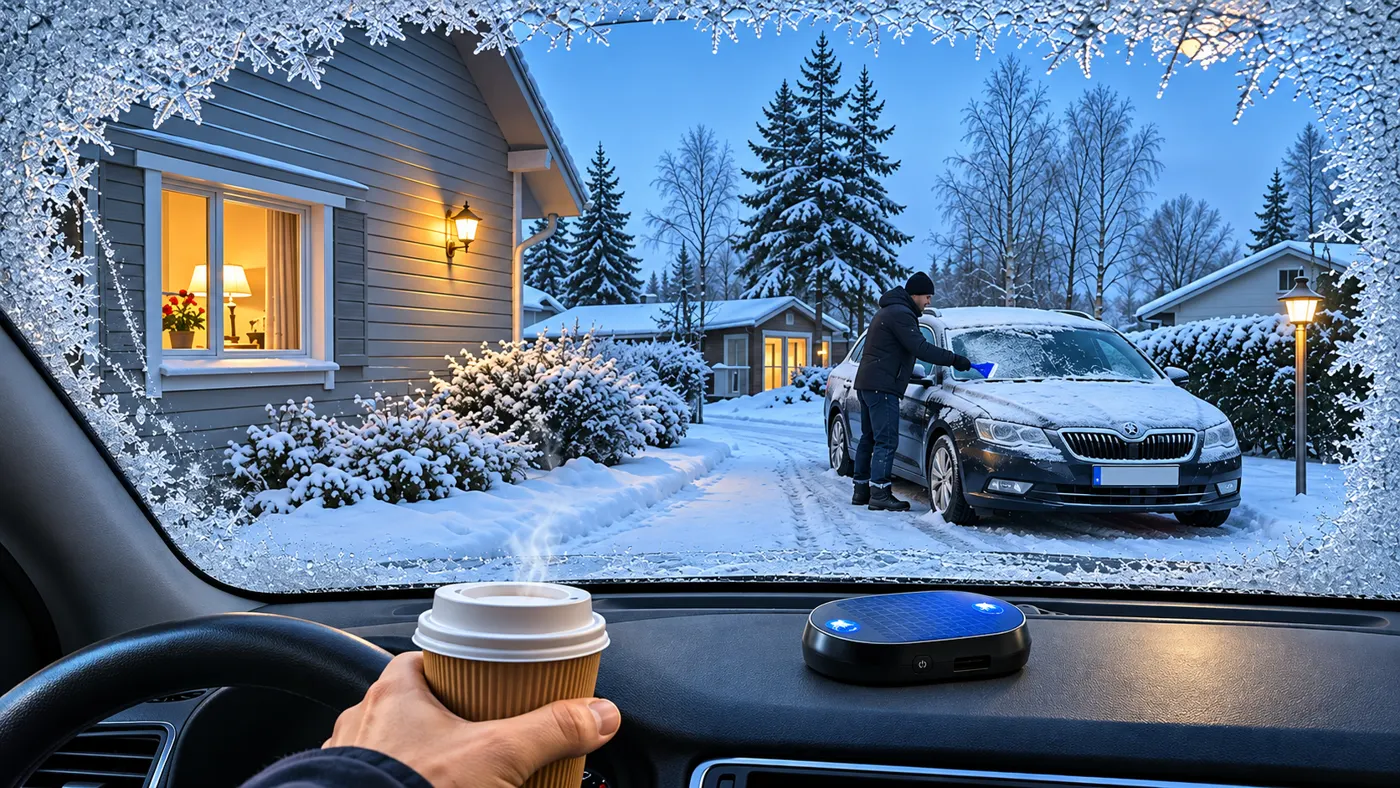
Quick answer
IceWave sits on your dashboard and emits 28–35 kHz ultrasonic vibration towards the windscreen, disrupting the bond between frost and glass. It switches itself on below 0 °C and is charged by solar panel or USB.
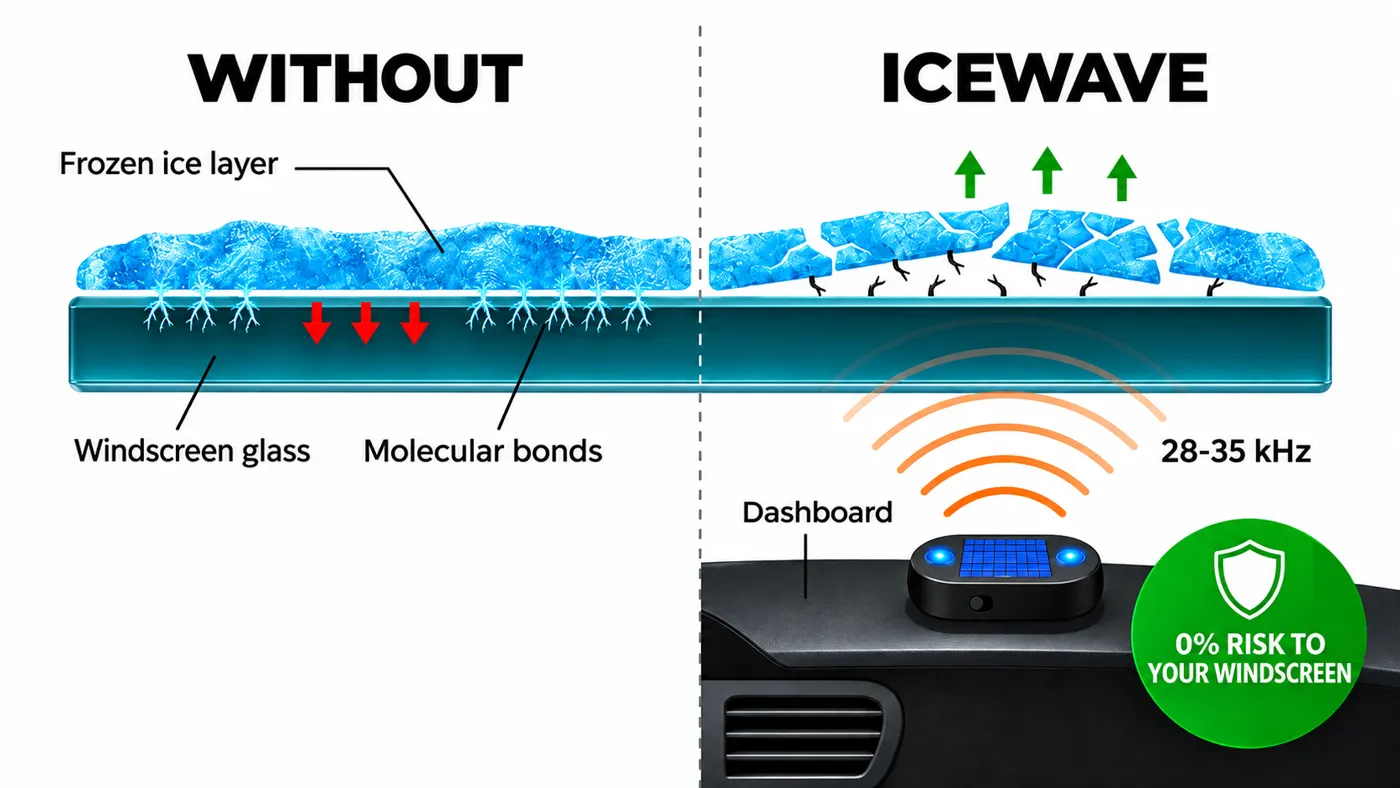
IceWave is designed to do the work while you sleep, so you have less to do in the morning. Here is exactly what it does, how to set it up, and what to expect, including its limits.
The short version
IceWave sits on your dashboard. When the air drops below 0 °C it switches itself on and sends 28–35 kHz ultrasonic vibration towards the windscreen. This is designed to disrupt the bond between frost and glass, so ice finds it harder to grip. It charges from its own solar panel, or from USB on dull days.
Quick facts
- Where it goes
- On the dashboard, facing the windscreen
- Switches on
- Automatically below 0 °C
- How it works
- 28–35 kHz ultrasonic vibration
- Can you hear it?
- No, it is above human hearing
- Charging
- Built-in solar panel or USB
- Fitting
- None: no wiring, no sticking
- Fits
- Any car, van or SUV
- Guarantee
- 30-day money-back
Charge, place, forget
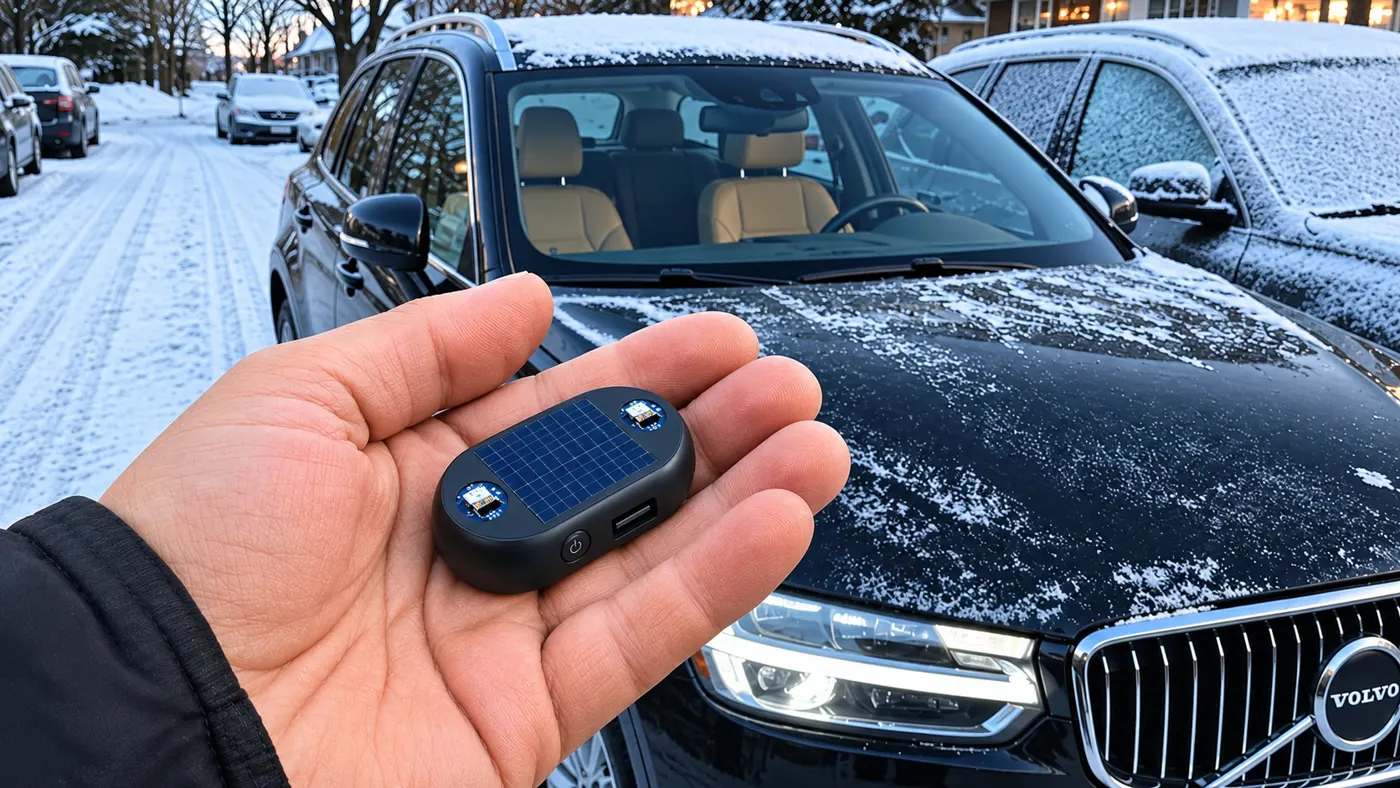
1. Charge
Charge it fully with the USB lead when it arrives.
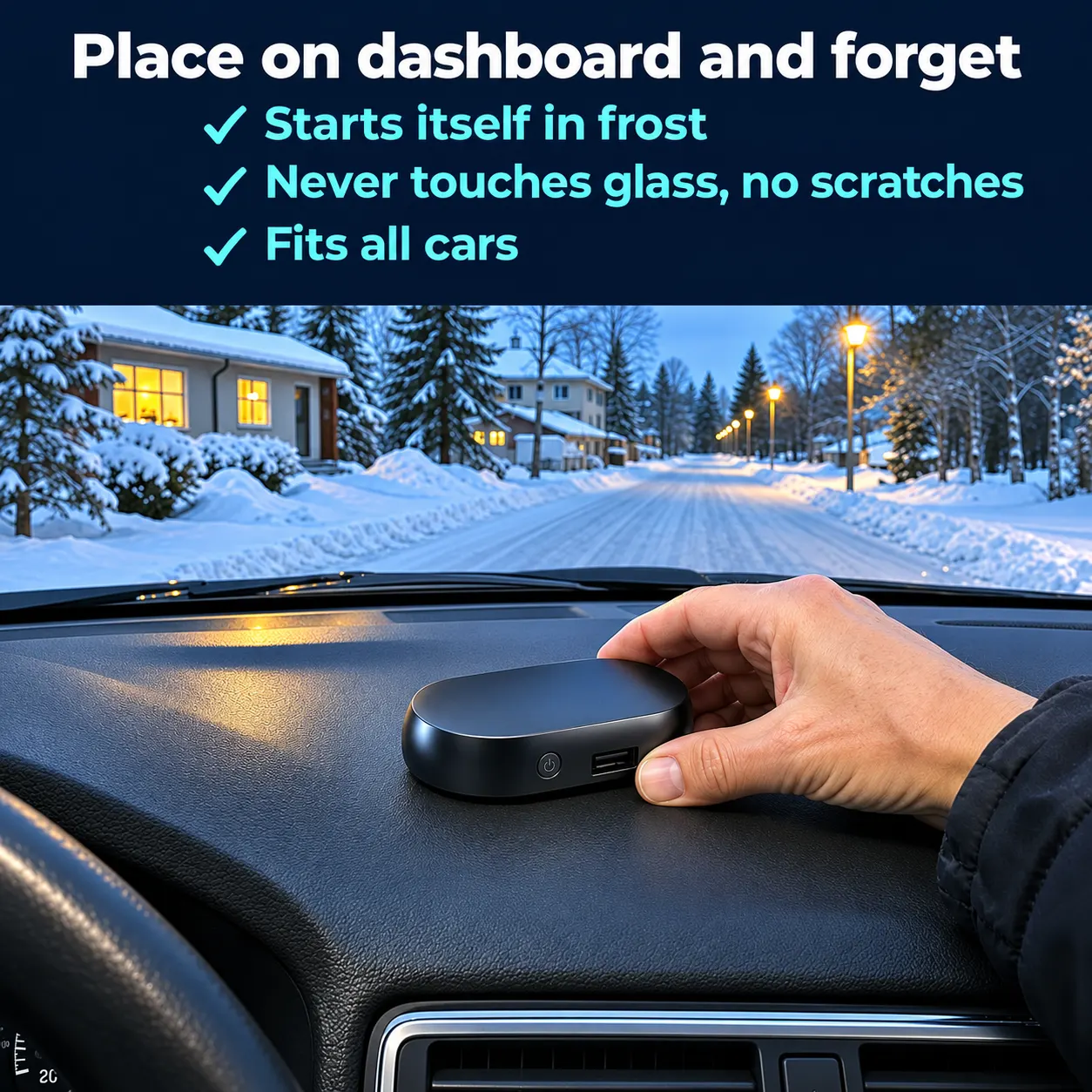
2. Place
Put it on the dashboard, close to the windscreen, facing the glass.
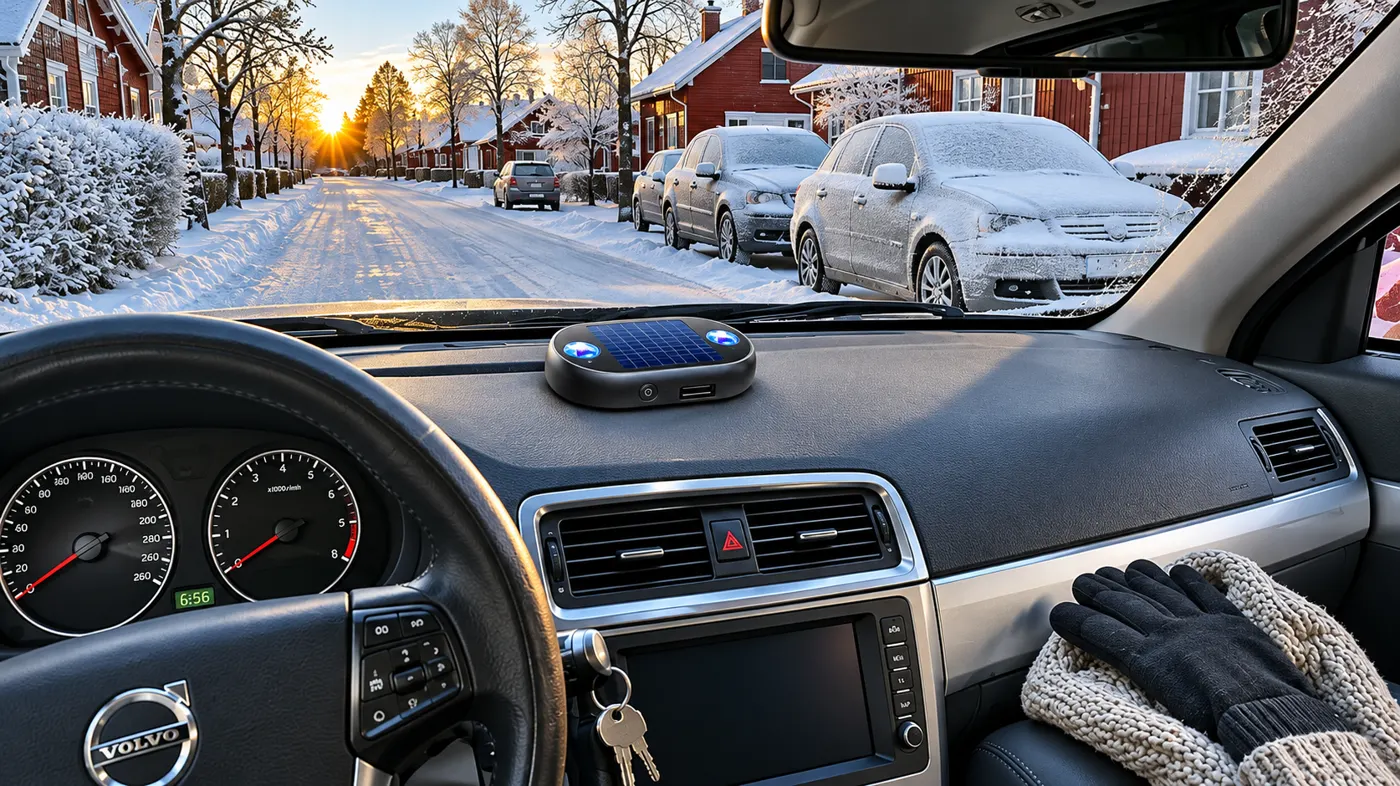
3. Forget
It switches on by itself on frosty nights and recharges by day.
Why windscreens frost over
On clear, still nights the glass loses heat to the sky and gets colder than the air around it. Moisture in the air settles on the cold glass and freezes into a layer of frost that grips tightly. That is why the windscreen can be white even when the ground looks clear, and why cars parked under trees or carports often frost less.
What the ultrasonic vibration does
Ultrasonic means sound above what people can hear. IceWave works at 28–35 kHz. The vibration is aimed at the windscreen to disturb water molecules as they try to settle and lock together as frost. The aim is not to melt ice but to stop it gripping the glass so firmly.
What happens overnight
Evening
Above 0 °C, IceWave rests on the dashboard and uses no power.
Temperature drops below 0 °C
Its sensor notices and it switches itself on.
Through the night
It sends 28–35 kHz ultrasonic vibration towards the windscreen, designed to stop frost gripping the glass.
Morning
The aim: little or nothing to clear. Heavy frost may still need a quick wipe; snow always needs brushing off.
Daytime
Its solar panel recharges it through the windscreen, ready for the next frosty night.
It switches itself on
A built-in sensor watches the temperature. Above freezing, IceWave rests. Below 0 °C, it starts working. You don't need to remember anything or check the forecast, which is a big difference from fitting a cover every evening.
Solar and USB charging
The solar panel on top charges IceWave from daylight through the windscreen. In the darkest weeks of a UK winter, or if you park in a garage by day, top it up with a USB lead from a plug or the car. There are no batteries to buy and no wiring into the car.
Setting it up in 3 steps
- Charge it fully by USB when it arrives.
- Place it on the dashboard, close to the bottom of the windscreen and facing the glass.
- Leave it there. It will switch on by itself on frosty nights.
It works in cars, vans and SUVs. There is nothing to stick, drill or plug in permanently.
Ready to skip the scraping?
From £59 · 2-pack £89 (£44.50 per car) · free UK delivery · 30-day money-back
Want to hear from drivers? Read our IceWave review and owner reviews.
Getting the best results
- Placement: as close to the bottom of the windscreen as you can, facing the glass. Don't hide it under papers or a phone holder.
- Clean glass: dirt and old smears give frost more to grip. Clean inside and out every couple of weeks in winter.
- Keep it charged: in the darkest weeks, or if you park in shade or a garage by day, top it up with USB.
- Keep the car dry: less damp inside means less mist on the inside of the glass.
- Keep a backup: a scraper and snow brush in the boot for snow and the hardest frosts.
Not working as expected?
Run through this quick checklist first:
- Is it fully charged? Give it a full USB charge and try again.
- Is it facing the windscreen, close to the glass?
- Was it actually below 0 °C? On some nights frost forms when the air is just above freezing on open ground.
- Was it very heavy frost or freezing fog? A quick wipe may still be needed.
- Is it snow rather than frost? Snow must always be brushed off.
Still not happy? Email support@icewaveuk.com; we reply within 1 working day. You're also covered by our 30-day money-back guarantee.
Myths and facts
| Myth | Fact |
|---|---|
| It heats the glass | No. It uses ultrasonic vibration, not heat, so it won't melt ice or snow. |
| It's noisy | No. 28–35 kHz is above human hearing. |
| It drains the car battery | No. It runs on its own charge from solar or USB, not the car. |
| It needs fitting | No. It just sits on the dashboard. |
| It clears snow | No. Snow must always be brushed off before you drive. |
| It works only in some cars | It sits on any dashboard: cars, vans and SUVs. |
What to expect, honestly
Frost varies a lot from night to night across the UK. On many frosty mornings you should find far less to clear. In very heavy frost you may still need a quick wipe, and snow always needs brushing off the glass, roof and lights. IceWave doesn't clear the inside of the screen; use your heater for mist. If it doesn't suit you, the 30-day money-back guarantee covers you.
How it compares
| Option | What you do | Ongoing cost |
|---|---|---|
| IceWave | Nothing, it works overnight | None |
| Ice scraper | Scrape for several minutes | Very low |
| De-icer spray | Spray, wait and wipe | New cans |
| Windscreen cover | Fit nightly, remove wet | Low |
Detailed comparisons: scraper, spray, cover, heated windscreen. Ready? See IceWave prices.
Common questions
Does IceWave need to be plugged in all the time?+
No. It charges from its solar panel through the windscreen. Use the USB lead for a top-up when daylight is short.
Where should I put IceWave?+
On the dashboard, close to the bottom of the windscreen and facing the glass.
Does it work every night automatically?+
Yes. It switches itself on when the temperature falls below 0 °C and rests the rest of the time.
Will it melt snow?+
No. IceWave is designed to stop frost gripping the glass. Snow must always be brushed off before you drive.
Can I move it between cars?+
Yes. Nothing is fitted, so you can move it, but most households prefer one for each car.
Does IceWave drain my car battery?+
No. IceWave runs on its own built-in charge from its solar panel or a USB lead. It isn't wired into the car.
Does it work with tinted or coated windscreens?+
IceWave sits inside the car and nothing touches the glass. If you have a special tinted or coated windscreen and want to check, email support@icewaveuk.com before ordering.
Is it safe around pets and children?+
There is no wiring and no chemicals, and it simply sits on the dashboard. As with any small device, keep it out of reach of young children and pets.
Sources
Ready for a clear windscreen every morning?
Launch price from £59 · Free UK delivery · 30-day money-back guarantee
Get IceWave now- 30-day guaranteeFull refund if you're not happy
- Free tracked deliveryTo every UK address
- Secure checkoutEncrypted connection
- UK customer supportReply within 1 working day